

By The Social Eyes Team
In Kinshasa, capital of the Democratic Republic of Congo, a three-year-old child catches polio. An invisible virus strikes his legs. A bleak future seems certain. But that’s when Junior chose to go the opposite way, and move forward. “My medicine has always been positivity,” he would later say. He is one of the emblematic figures of the international dance crew ILL-Abilities. They’re a group of hip-hop dancers living with physical disabilities that push back the limits of what was thought possible. The power of a weakness.
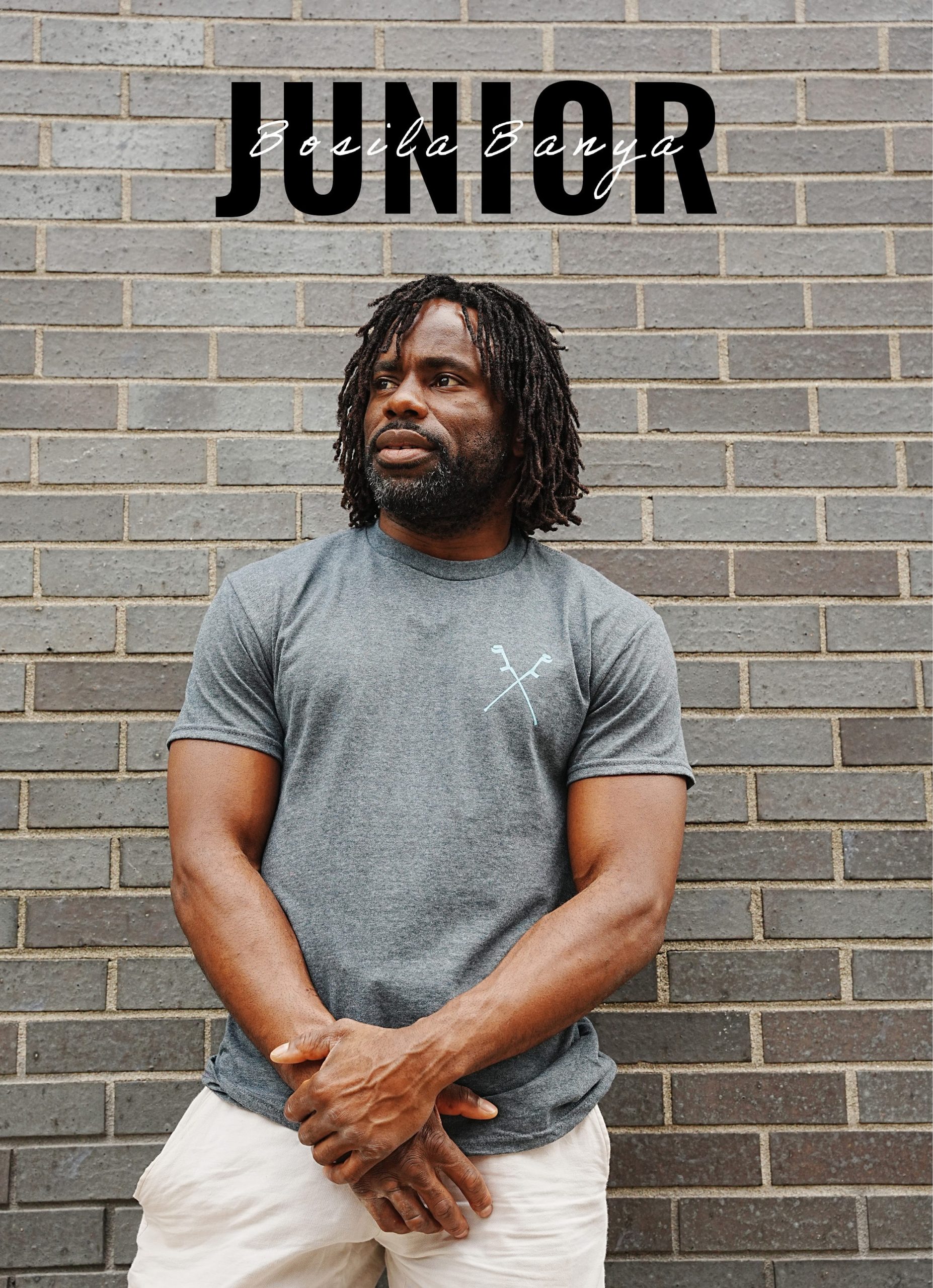
“My medicine has always been positivity”
Junior hides nothing. He openly volunteers how he discovered break dancing: How much the culture “changed” him, offering him a style, a language, a posture. “Breaking taught me respect, perseverance, and the willingness to always go further,” he says.
He doesn’t talk about integration. He talks about expression. He doesn’t want us to make a place for him. He creates one. His body becomes moving architecture. His bent arms balance on the hard ground and his legs wave in the air. We aren’t looking at a “handicapped dancer” anymore. We’re watching a dancer, full stop. Or moreover, a complete artist.
That’s the heart of what ILL-Abilities does: abolish pity, blow up norms, refuse exclusion through reinvention. Their dance is a battlefield where, each evening, they rejoice in the right to be complex, strong, different.
Polio, Poetry and Politics
Polio can be fatal. Junior often speaks of choices. He says: “Every battle can be a springboard.” And in his mouth, this isn’t just talk. It’s memory. That of mute battles, pain suffered in silence, faces that couldn’t speak up.
When he dances, Junior also speaks for them. He is the standard bearer for a story that is only rarely written: that of black disabled bodies. Invisible in dominant narratives, caricatured or ignored, these bodies are too often reduced to pain or to being an example. Junior refuses both.
Black and Disabled
In Canada, the Canadian Paralympic Association and Statistics Canada say that 26% of participants in community sports perceive racism or discrimination.
So artists like Junior are not just unusual: they are figures people can identify with, catalysts of conscience. This, in a world in which black disabled bodies are not very visible in the collective imagination.
Junior shows that the stage can be a place of power and dignity. His journey from Kinshasa to the international stage represents a collective refusal to be erased.
He doesn’t demand to be seen. He creates a visibility that redefines standards. In this sense, his presence in ILL-Abilities isn’t just symbolic, but strategic. He shakes up perceptions by welding art with humanity.
Art as Resistance
Junior dances to exist. To signify that a handicap isn’t a lack, but a variation of the real. Another form of bodily intelligence. He dances to break free from the audience’s fixed gazes.
“Don’t judge people by what you see,” he tells us. “Their true value is elsewhere, deeper.” And that’s where it all begins: in the refusal to be pigeonholed. Dance as resistance. The body as a story to tell. Art as a refusal to be contained.
Leave a Reply